 Rivac AI Labs
AI Search Visibility · AEO + GEO
Presence Mesh
Know what AI tells your buyers. Fix it. Prove it.
Your buyers ask ChatGPT, Gemini, Perplexity and Claude before they ever visit your site. Presence Mesh shows you what those AI engines say about you, finds what is missing or wrong, fixes it, and proves what moved, all in one system.
Our own team already uses Presence Mesh internally. We are getting it ready to open to everyone.
- ChatGPT
- Gemini
- Google AI Overviews
- Google AI Mode
- Perplexity
- Claude
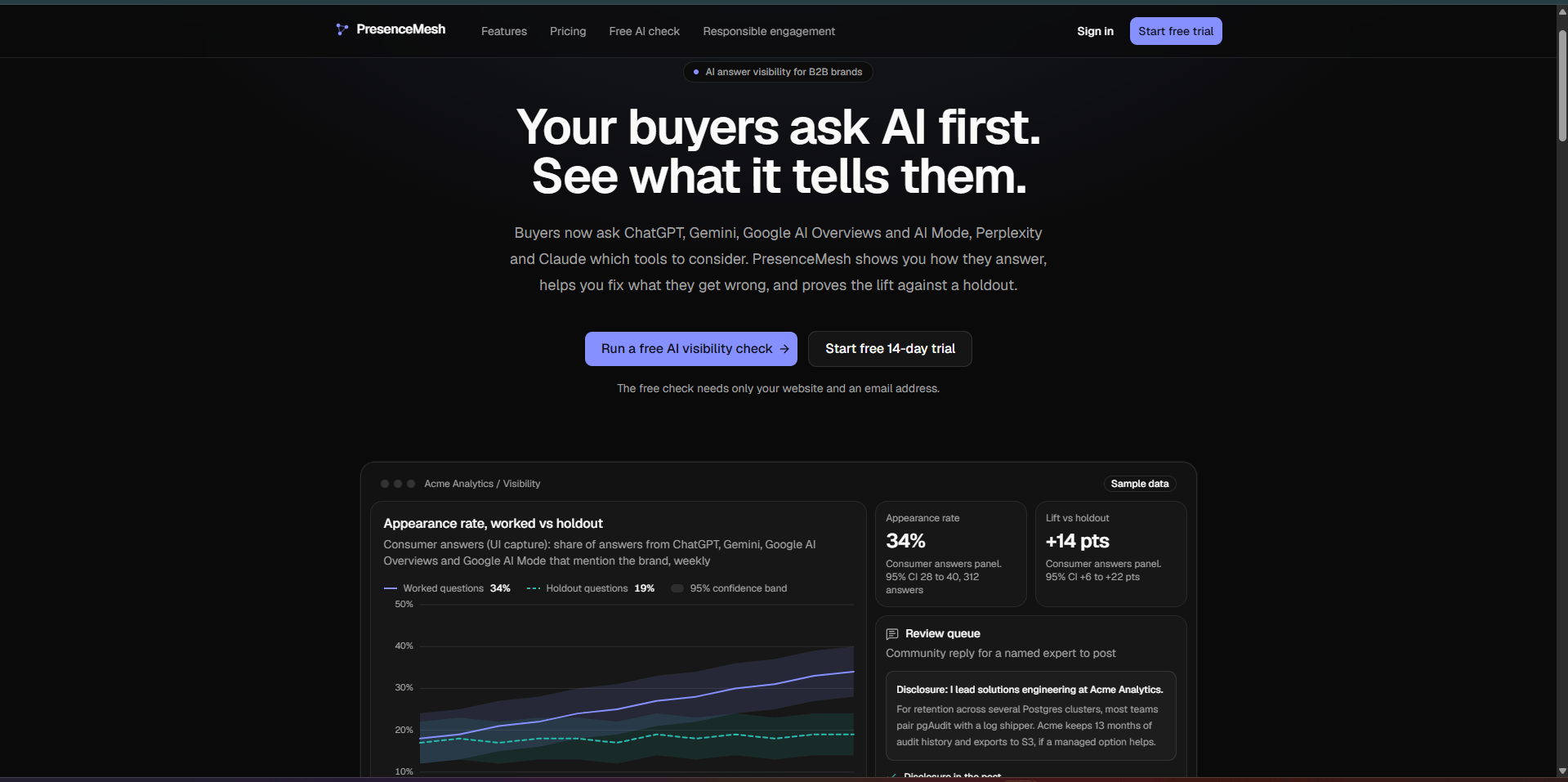
Inside the product
This is what you will actually look at
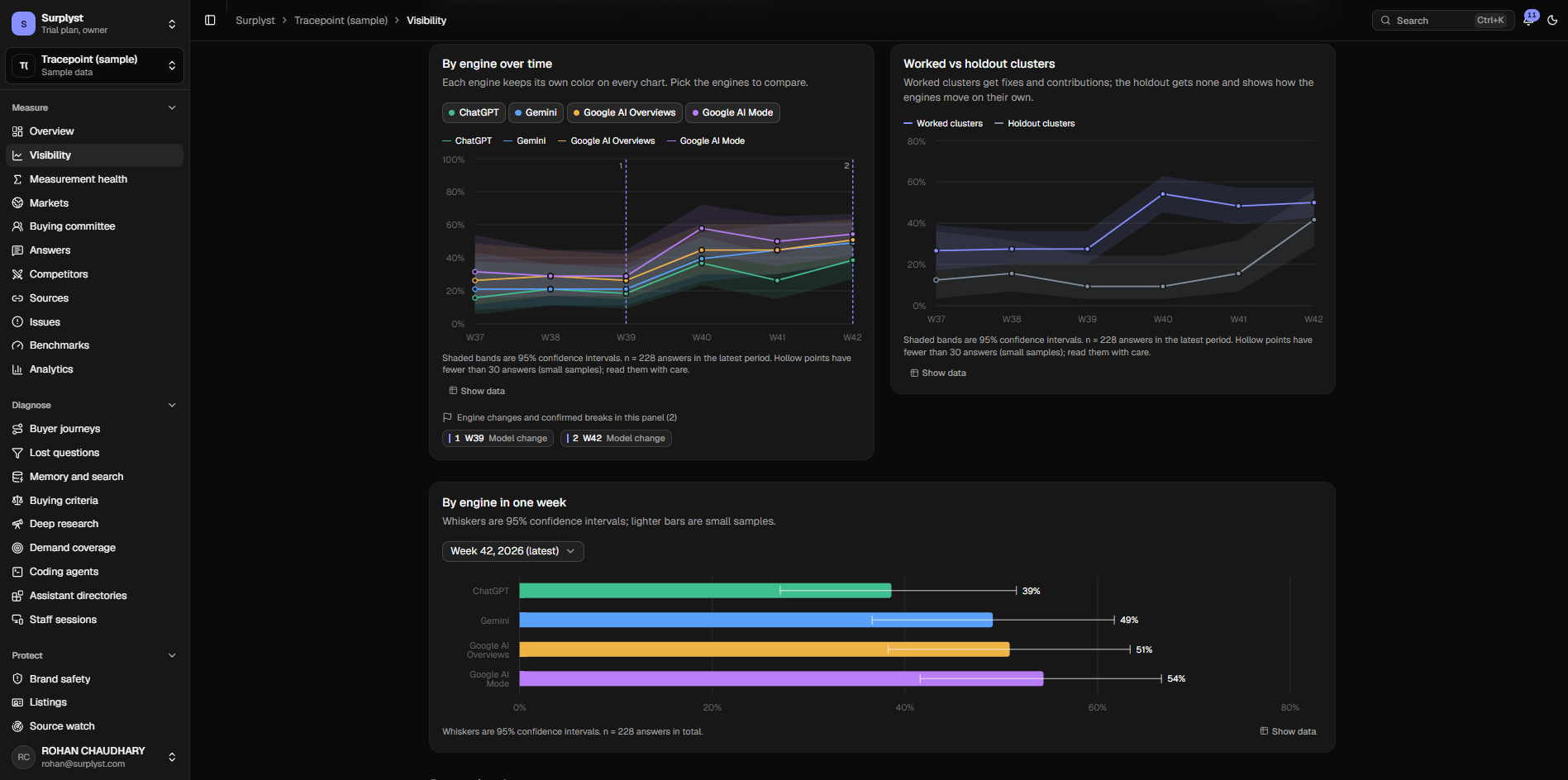
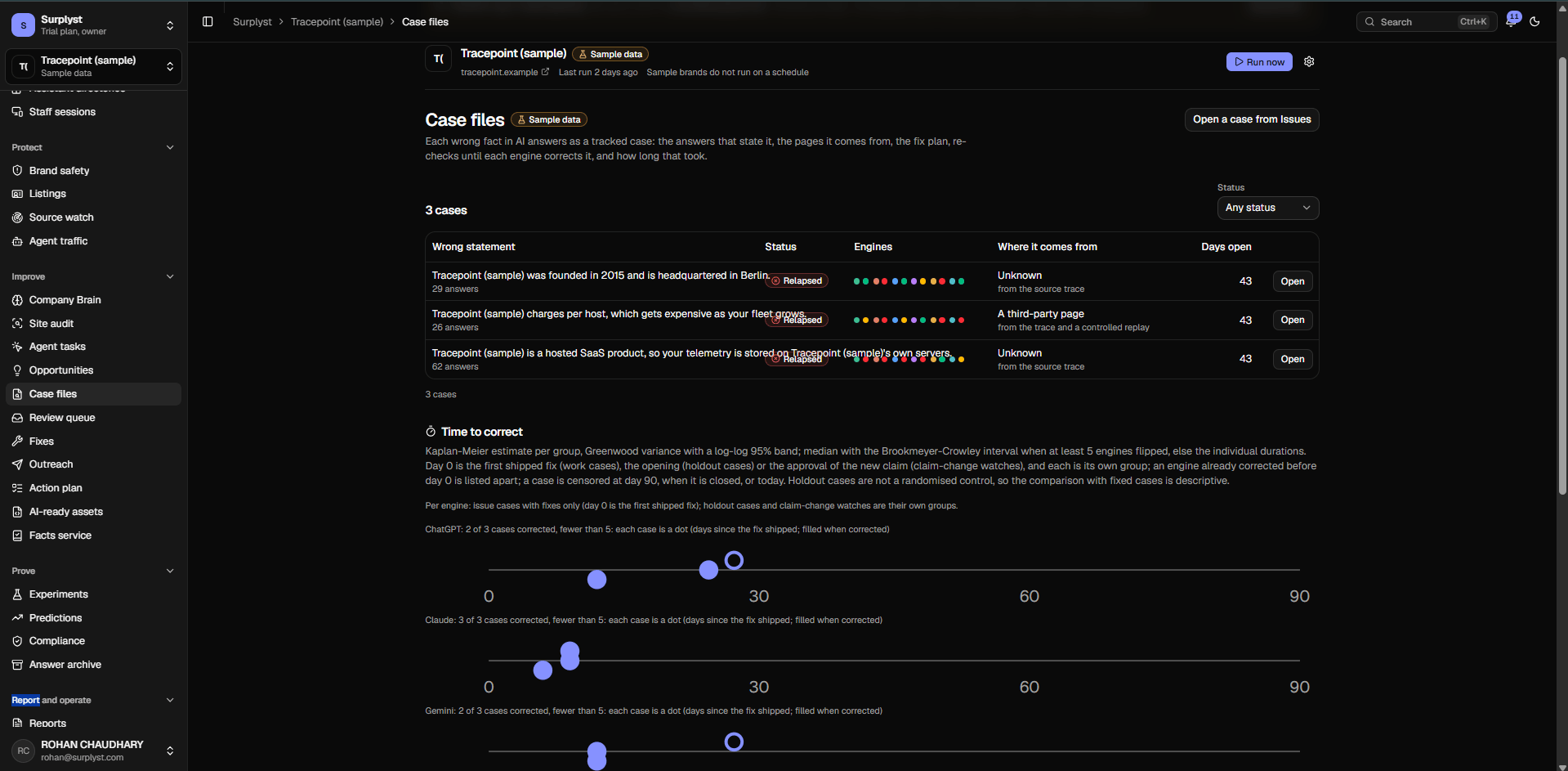
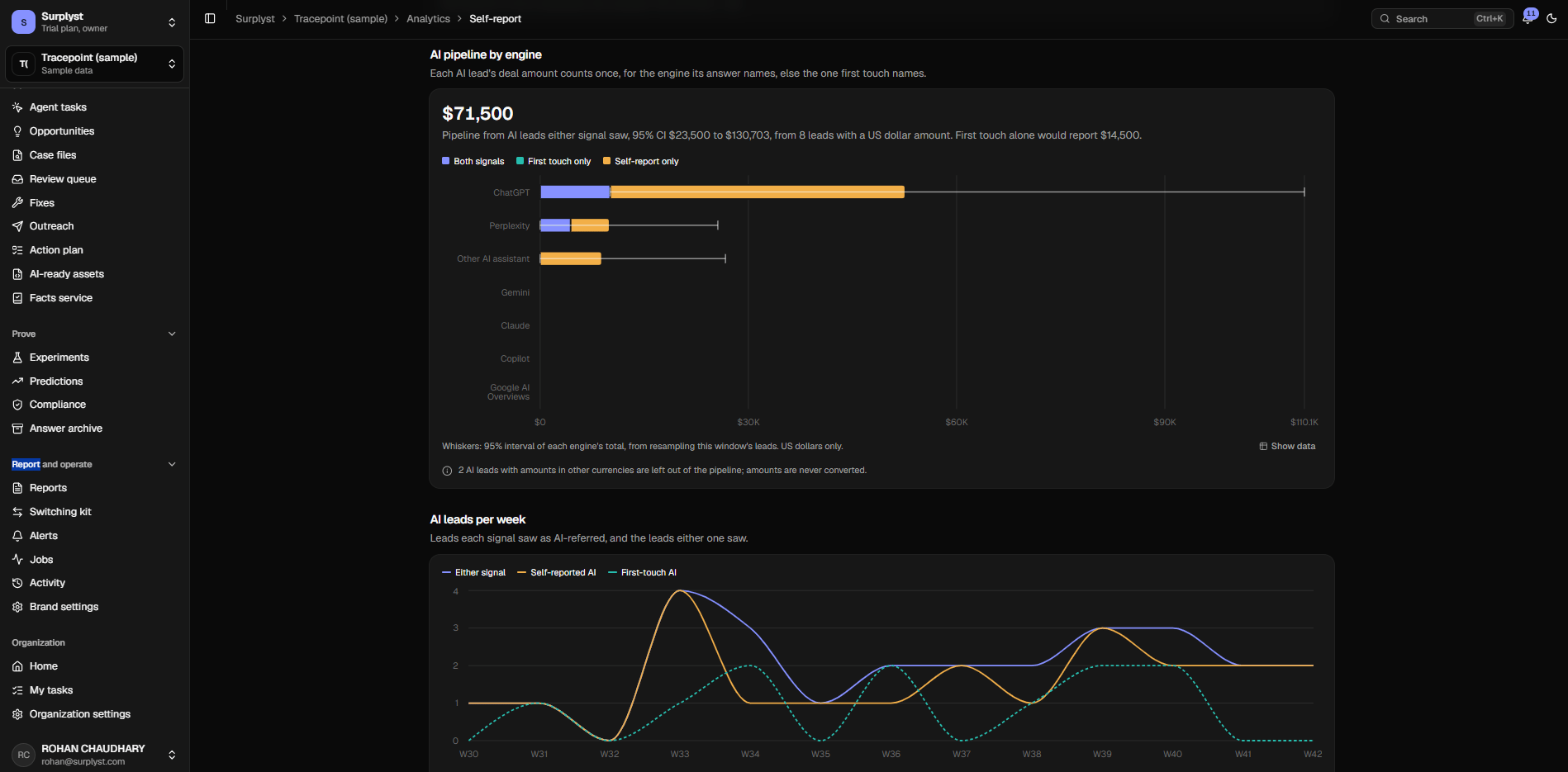
Real screens from Presence Mesh, shown here on sample data for a fictional company. Not a customer's results.
The problem
Your buyers ask AI first. The answer may leave you out.
You are not in the answer
AI engines name a handful of products per question. If yours is not one of them for the questions your buyers actually ask, you are not on the shortlist.
The answer is wrong
Old pricing, a retired product name, the wrong city, a competitor's feature credited to you. Engines repeat whatever the pages they read say.
Someone else's page decides
Answers lean on comparison posts, forums and review sites you do not control. Most teams never see which pages those are.
How it works
One loop, end to end
Being the answer AI gives (answer engine optimization) and being the source it cites (generative engine optimization) are one job. Presence Mesh runs both in a single weekly loop.
- 1
Measure
Ask every major AI engine your buyers' real questions, again and again, and record exactly what comes back.
- 2
Understand
For every question you lose and every fact that is wrong, find out why and which page is behind it.
- 3
Fix
Draft the fixes for your own site, the replies your experts can give, and the outreach to the pages engines already trust.
- 4
Prove
Report what changed against topics we deliberately left alone, with honest margins, so progress is real, not luck.
What is inside
Everything in the loop, in plain words
See what AI says about you
Do we show up, and how are we described?
Every major engine, one view
ChatGPT, Gemini, Google AI Overviews, Google AI Mode, Perplexity and Claude, side by side, with answers from the consumer apps and from the official APIs reported separately because they differ.
Your buyers' real questions
60 to 100 questions your buyers genuinely ask, asked repeatedly, not a one-off snapshot.
Numbers you can trust
How often you appear, shown with a stated margin of error, so a lucky run is never mistaken for progress.
Whole conversations, not single questions
Follow a buyer through a back-and-forth chat to see where you drop out and who takes your place.
Deep-research shortlists
Check whether you make the comparison table when an AI is asked to research and rank vendors for a buyer.
Coding assistants, for developer tools
See what AI coding assistants recommend when a developer needs a tool like yours.
Every market separately
Track each country or product line on its own, because AI answers differ by market.
Model-change labels
When an engine changes its model, your charts say so, so an engine update is never mistaken for your result.
Find what is wrong, and where it came from
What is AI getting wrong, and why?
Wrong-fact case files
Every wrong claim gets a file: the evidence, the page it most likely came from, the fix, and re-checks until it is corrected.
Facts you approve
A single set of approved facts about your company. Every claim is checked against it, and when your own pages disagree, we ask you, never guess.
Memory or live page?
Tells you whether an engine is remembering an old fact or reading it from a page today, which decides whether the fix is quick or slow.
Brand-safety scan
Catches AI answers that send buyers to fake login links, wrong support numbers or lookalike domains.
Source-poisoning watch
Spots pages that appear to be planting false claims about you for AI engines to repeat.
Consistent everywhere
Checks that review sites, directories and profiles tell the same story about you as your own site.
Win the questions you are losing
How do we get into the answer?
Why you lost, question by question
For each lost question: was your page never found, found but not read, read but not cited, or cited but not used? You get the real reason, not a guess.
Why competitors win
A clear view of what each engine credits your competitors for, and what it credits you for, against the criteria buyers care about.
The whole buying committee
Questions as the CFO, the security lead, the engineer and procurement would each ask them.
Your own data picks the questions
Search queries and sales-call notes shape the question list, so it reflects real demand.
Fixes for your site and docs
FAQ answers, documentation corrections, structured data and comparison pages, delivered as draft pull requests or CMS drafts your team approves and publishes.
Expert replies, posted by your people
Helpful answers in the conversations your buyers read, drafted for your named experts, who post them themselves with a disclosure.
Outreach to the pages AI already trusts
One-to-one emails to the sources engines cite, each one sent by a person.
Ready for AI agents
A machine-readable page of your approved facts, and audits of whether an AI agent can actually complete a buying task on your site.
Prove what moved
Did it work, and can we show it?
Compared with topics we leave alone
Some topics are deliberately left untouched, so you can see what our work changed versus what would have happened anyway.
Tests decided in advance
The test, the measure and the success rule are written down before a change ships, so results cannot be cherry-picked afterwards.
A forecast before you publish
Each fix is forecast before it goes live, and the forecasts are scored afterwards so you see how reliable they are.
Leads that came from AI
Connects to your CRM and analytics to count the leads AI sends you, including buyers who write "ChatGPT told me about you."
Proof AI is reading your pages
Your server logs show whether AI crawlers actually fetched the pages you fixed.
A record that cannot be quietly changed
Every captured answer is archived in a tamper-evident record you can hand to anyone.
Compliance evidence pack
A full log of what was done, disclosure re-checks, and a signed export for your legal or security team.
Rules the software enforces, not just our intentions
Human approval on everything
A named person on your side approves every fix, reply and email before anything goes out.
Only facts you approved
Every factual sentence drafted about you traces back to a fact your team signed off.
It never posts for you
The software never posts on third-party sites. Your people post from their own accounts.
Always disclosed
Anything posted that mentions you, a competitor or your category says who the poster works for, in the post itself.
No fake accounts, no fake reviews
No personas, no bought accounts, no reviews, ratings or votes in anyone's voice.
No ranking promises
Nobody outside the AI engines controls their answers. We promise the work and honest measurement, not placement.
Who it is for
A good fit
- B2B software and developer-tool companies with real documentation, a blog and product pages
- Teams with at least two people willing to post under their own names, with disclosure
- One approver who can turn a review around quickly
Not a fit
- Anyone who wants undisclosed posting, fake reviews or guaranteed placement in AI answers
- Teams with nobody who can ship fixes to their own site
See where AI answers leave you out.
Tell us about your company. We look at how AI engines answer a few of your buyers' questions today and whether Presence Mesh is a fit.
Book a Call